Loading... Today

-- 0

-- 0

The Electrical Post
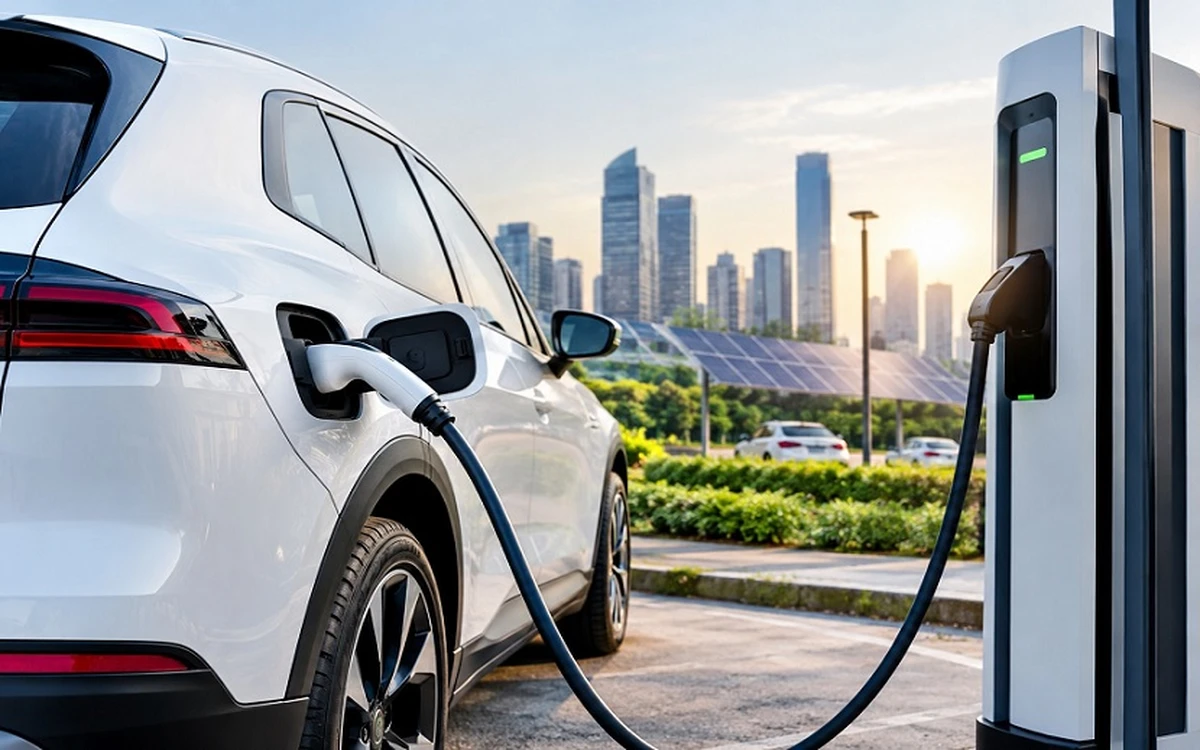
India's electric vehicle (EV) market is entering a decisive growth phase, supported by strong policy backing, expanding charging infrastructure, declining battery costs and increasing consumer acceptance. At the same time, global electric mobility is transitioning from an emerging technology segment into a mainstream transportation solution, creating significant opportunities for Indian manufacturers, power utilities, charging infrastructure providers and battery producers.
According to the Bureau of Energy Efficiency's (BEE) EV Digest, India's EV market has evolved rapidly over the past decade, with annual electric vehicle registrations rising from just a few thousand units in FY2014 to more than 1.2 million units by FY2023. The growth has been led primarily by electric two-wheelers and three-wheelers, which have emerged as the dominant segments due to lower ownership costs and favorable economics compared to conventional vehicles.
The Indian EV ecosystem is being shaped by ambitious national targets. India aims to achieve EV sales penetration of 80% in the two- and three-wheeler segments, 70% in commercial vehicles, 30% in private cars and 40% in buses by 2030. These targets align with the country's broader commitment to achieve net-zero emissions by 2070 and reduce dependence on imported fossil fuels.
A key feature of the Indian EV story is that it differs significantly from global markets. While electric passenger cars dominate EV adoption in China, Europe and North America, India's transition is being driven by electric two-wheelers and three-wheelers. This reflects local mobility patterns, affordability considerations and the economics of urban transportation. Electric three-wheelers have gained widespread acceptance in commercial passenger and cargo transport, while electric scooters and motorcycles are increasingly becoming the preferred option for urban commuters.
The market's growth trajectory is also supported by government initiatives such as FAME, production-linked incentive schemes for advanced chemistry cells, state-level EV policies and investments in charging infrastructure. Industry estimates indicate that EV registrations in India have been growing at annual rates exceeding 50-60% in recent years, making the country one of the fastest-growing EV markets globally.
However, the Indian EV market continues to face structural challenges. Electric passenger vehicles still account for a relatively small share of overall automobile sales, primarily due to higher upfront costs, limited charging infrastructure in certain regions and consumer concerns regarding range and resale value. Industry analysts note that the widening availability of affordable EV models and continued charging network expansion will be critical to accelerating adoption in the passenger vehicle segment.
The charging ecosystem remains one of the most important enablers of future growth. As EV penetration rises, investment in public charging stations, highway charging corridors, depot charging infrastructure and battery-swapping networks will become increasingly important. The development of charging infrastructure is expected to create substantial opportunities for power distribution companies, renewable energy developers and energy service providers.
Globally, the EV industry has entered a new phase of expansion. According to the International Energy Agency (IEA), electric mobility is now a central component of energy transition strategies worldwide. Global EV sales have reached record levels, supported by favorable policies, technological improvements and declining battery costs. The industry is increasingly influencing electricity demand patterns, battery supply chains and transportation economics across major economies.
China continues to dominate the global EV landscape, accounting for the largest share of EV production, battery manufacturing and vehicle sales. Europe remains a major market driven by stringent emissions regulations, while the United States continues to expand its EV manufacturing base through industrial policy support and investments in domestic supply chains. Emerging economies, including India, Brazil, Southeast Asian countries and parts of the Middle East, are also becoming increasingly important contributors to global EV demand growth.
One of the most significant developments globally has been the growing integration of EVs with energy systems. Electric vehicles are no longer viewed solely as transportation assets but also as potential contributors to grid flexibility, renewable energy integration and energy storage solutions. As renewable energy penetration increases worldwide, EV charging infrastructure and battery technologies are expected to play a crucial role in balancing electricity supply and demand.
Battery technology remains the cornerstone of the global EV revolution. Continued improvements in battery performance, charging speeds, energy density and manufacturing scale are helping narrow the cost gap between electric and conventional vehicles. Industry forecasts suggest that battery costs will continue to decline over the coming years, further improving the competitiveness of EVs across multiple vehicle segments.
For India, the global EV transition presents both opportunities and challenges. The country has the potential to emerge as a major manufacturing hub for electric vehicles, batteries, charging equipment and critical components. Rising domestic demand, a large automotive manufacturing base and supportive government policies provide a strong foundation for growth. At the same time, India must address supply chain vulnerabilities, expand charging infrastructure, secure critical mineral resources and strengthen domestic battery manufacturing capabilities to remain competitive in the rapidly evolving global market.
The outlook for the Indian EV sector remains highly positive. Increasing fuel prices, tightening environmental regulations, urban air quality concerns and technological advancements are expected to accelerate adoption across vehicle categories. As battery prices continue to fall and charging networks expand, electric mobility is likely to move beyond early adopters and become a mainstream transportation option.
The convergence of government policy support, private-sector investment, technological innovation and global market momentum suggests that India is approaching a critical inflection point in its electric mobility journey. While challenges remain, the country's growing EV ecosystem is increasingly aligned with global trends, positioning India as one of the most important growth markets in the next phase of the worldwide electric vehicle revolution.
1 days ago
Total Views : 5
1 days ago
Total Views : 12
1 days ago
Total Views : 6
last week
Total Views : 18
last week
Total Views : 22
2 weeks ago
Total Views : 52
2 weeks ago
Total Views : 103
2 weeks ago
Total Views : 67

2 weeks ago
Total Views : 103

2 weeks ago
Total Views : 62