Loading... Today

-- 0

-- 0

- Polycab Continues Industry Outperformance, Posts Historic FY26 Revenue and PAT
The Electrical Post
Polycab India Limited delivered its highest-ever annual and quarterly revenues in FY26 despite a challenging global macroeconomic backdrop, according to Chief Financial Officer Niyant Maru during the company's Q4 FY26 earnings call. The company demonstrated resilience amid geopolitical uncertainties, sustaining industry-leading performance through disciplined execution, strong operational capabilities and continued investments in growth initiatives.
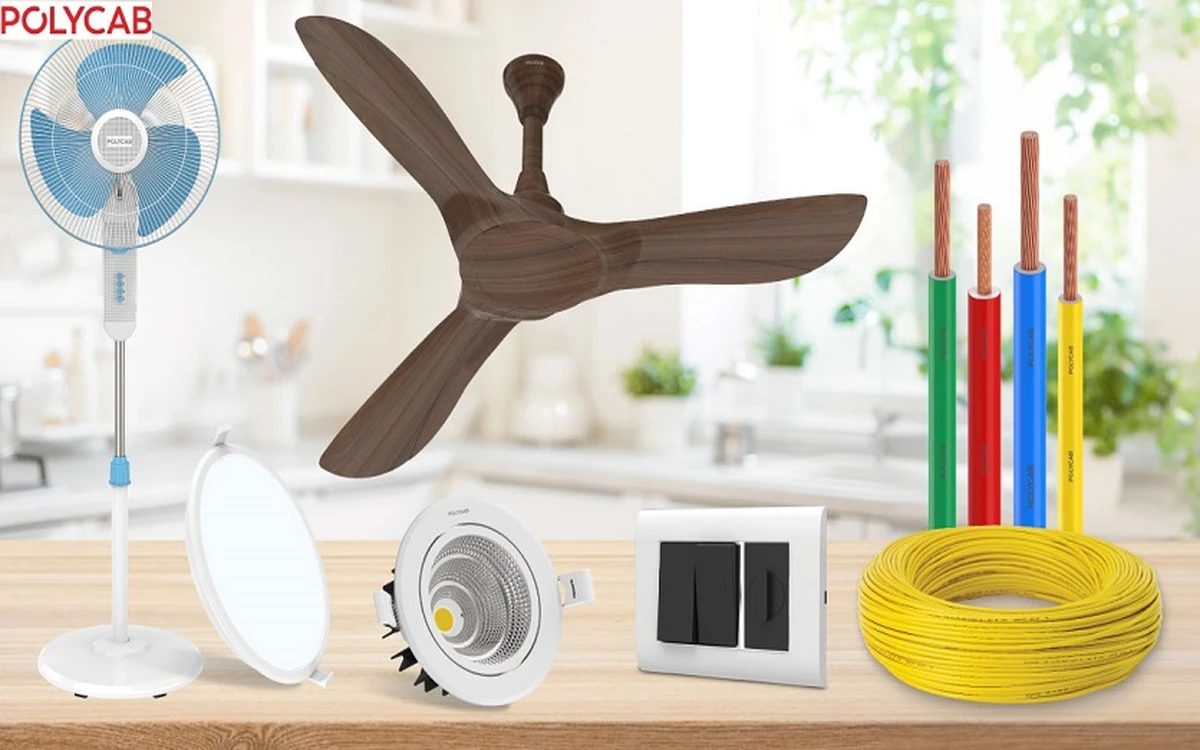
Polycab India Limited (PIL) is India’s No. 1 Wires and Cables Company and among the fastest-growing players in the FMEG category. PIL is at the forefront of providing innovative, safe and energy efficient products to a diverse set of customers via a strong distribution network of authorized dealers and retail outlets. PIL has also served customers in 70+ countries globally. PIL’s employees are dedicated to upholding robust governance practices, preserving a customer centric culture, having a purpose to serve the communities, and imbibing a genuine sense of ecological consciousness.
Maru highlighted that demand sentiment was affected to some extent by geopolitical developments in the Middle East, but the company's agile execution enabled it to maintain strong momentum. The Wires and Cables business posted robust growth, supported by healthy demand conditions and efficient execution, while the Fast Moving Electrical Goods (FMEG) segment continued to gain traction through an improved product mix and broader market reach. The company remains focused on execution excellence, translating strategic priorities into tangible outcomes and strengthening its foundation for long-term growth.
The company reiterated its priorities of sustaining growth momentum, reinforcing competitive positioning and continuing investments in innovation, talent and capabilities. At the same time, management acknowledged that the global macroeconomic landscape has undergone significant changes since the previous earnings call. The conflict involving the United States, Israel and Iran, which intensified towards the end of February 2026, emerged as one of the most consequential global developments of the quarter, creating disruptions across energy markets, currencies, equity markets and monetary policy frameworks.
Crude oil prices witnessed a sharp increase, with Brent crude hovering around US$100 per barrel, while disruptions in the Strait of Hormuz heightened supply concerns. This led to renewed inflationary pressures and higher global bond yields. Central banks across major economies adopted a more cautious stance. The U.S. Federal Reserve maintained rates between 3.5% and 3.75%, revising inflation projections upward. The Bank of England kept rates at 3.75%, with markets anticipating further hikes, while the European Central Bank retained rates at 2% but raised its inflation outlook for 2026. The Bank of Japan also remained cautious despite market expectations of further tightening.
Against this backdrop, India continued to exhibit strong economic momentum. The country's GDP growth for FY26 is projected at approximately 7.6%, marking the fourth consecutive year in which India remains the world's fastest-growing major economy. Quarterly growth remained robust throughout the year, with Q1 registering 7.8%, Q2 accelerating to 8.4%, and Q3 maintaining a healthy 7.8%.
Although high-frequency indicators during Q4 showed signs of moderation in areas such as air passenger traffic, port cargo volumes and e-way bill generation, the broader consumption environment remained encouraging. Credit growth sustained double-digit momentum, while government capital expenditure continued largely on track, with nearly 86% of revised budget estimates spent by February 2026. Rising capacity utilization and improving order pipelines also signaled a gradual broadening of the private sector capital expenditure cycle.
India's real estate market maintained healthy momentum, supported by strong launches and sales across major cities. Inflation also remained well controlled, with March 2026 consumer price inflation standing at 3.4%, comfortably below the Reserve Bank of India's target level. This environment of strong growth coupled with subdued inflation enabled the RBI to implement cumulative rate cuts of 125 basis points during the year, supporting household consumption, retail credit and investment activity.
India's foreign exchange reserves remained robust at approximately US$682 billion, equivalent to more than 11 months of import cover, providing a buffer against global volatility. Domestic institutional investors also played a stabilizing role in capital markets by absorbing foreign capital outflows. However, management cautioned that rising crude oil prices and the depreciation of the Indian rupee to a record low of ₹94.83 per U.S. dollar could exert upward pressure on inflation in the coming quarters.
Polycab reported consolidated revenue growth of 27% year-on-year during the fourth quarter, driven by strong performance in both the Wires and Cables and FMEG segments. EBITDA increased by 13% year-on-year, with margins standing at 13.1% despite industry headwinds and softer trade sentiment arising from geopolitical developments in the Middle East.
The company recorded its highest-ever quarterly profit after tax at Rs. 7.9 billion, representing a growth of 7% over the previous year, while PAT margins stood at 8.9%. Finance costs during the quarter amounted to ₹746 million, and other income totaled Rs. 604 million.
Polycab maintained a strong balance sheet with a net cash position of ₹41.9 billion. The working capital cycle improved to 25 days in the fourth quarter, primarily due to temporary increases in payable days associated with the use of letters of credit for raw material procurement. Management expects the working capital cycle to normalize to its steady-state range of 45 to 50 days.
Capital expenditure during the quarter stood at Rs. 3.9 billion, taking total FY26 capex to approximately ₹14.8 billion, in line with the company's Project Spring guidance.
FY26 emerged as a landmark year for Polycab, with the company achieving record revenue, EBITDA and profit levels. Annual revenue crossed the Rs. 285 billion milestone, growing 29% year-on-year. EBITDA expanded by 35% and outpaced revenue growth, while margins improved to 13.9%. Profit after tax increased 32% year-on-year, surpassing Rs. 27 billion, with PAT margins reaching 9.4%.
Management emphasized that this performance reinforces Polycab's position as the most profitable company in the Indian electrical industry for the fourth consecutive year. The company also retained its status as the largest player in the Indian electrical sector by revenue for the second consecutive year.
Polycab continued to strengthen its market leadership in the domestic wires and cables segment, with organized market share increasing to 30–31% from 18–19% in FY19. Compared with FY25 levels of 26–27%, the company recorded a gain of approximately 300 to 400 basis points. Management attributed these gains to structural factors, including increasing consumer preference for quality products, the shift towards organized players, and the company's ability to reliably serve customers across geographies.
The company stated that its expanding distribution network, stronger channel engagement and continued focus on premiumization have enabled it to capture incremental demand across both channel and institutional segments. Scale advantages and backward integration continue to support its competitive positioning, allowing it to grow faster than the broader industry.
FY26 also marked an important milestone in capital investments, as annual capex exceeded Rs. 14.5 billion for the first time in the company's history. Polycab remains committed to executing its planned capital expenditure programme of Rs. 60 billion to Rs. 80 billion over the next five years under Project Spring, aimed at enhancing manufacturing capabilities, scale and innovation.
Within the FMEG business, the company continued to outperform industry growth, maintaining its objective of growing at 1.5 to 2 times the market rate while progressing towards its long-term EBITDA margin target of 8% to 10% by FY2030.
Polycab also increased its dividend payout ratio to approximately 27.2%, up from 26.3% in the previous year, in line with its commitment to exceed a 30% payout ratio by FY2030.
Alongside financial achievements, the company strengthened its environmental, social and governance initiatives during FY26. Key actions included conducting climate risk assessments, undertaking double materiality assessments and aligning internal policies more closely with ESG metrics and global best practices, reflecting its commitment to sustainable and responsible growth.
1 days ago
Total Views : 11
1 days ago
Total Views : 7
2 days ago
Total Views : 15

last week
Total Views : 44
last week
Total Views : 91
last week
Total Views : 31
last week
Total Views : 141
last week
Total Views : 36
last week
Total Views : 84
last week
Total Views : 31