Loading... Today

-- 0

-- 0

Adani Power Reports Strong FY26 Performance, Expands Capacity Pipeline and Eyes New Growth Opportunities
FY26 power generation reaches a record 105 billion units; company secures 13.3 GW of long-term PPAs, plans Rs. 58,000 crore capex over the next two years, and begins groundwork for future nuclear power investments while expanding thermal and hydro portfolios.
The Electrical Post / 2 May 2026
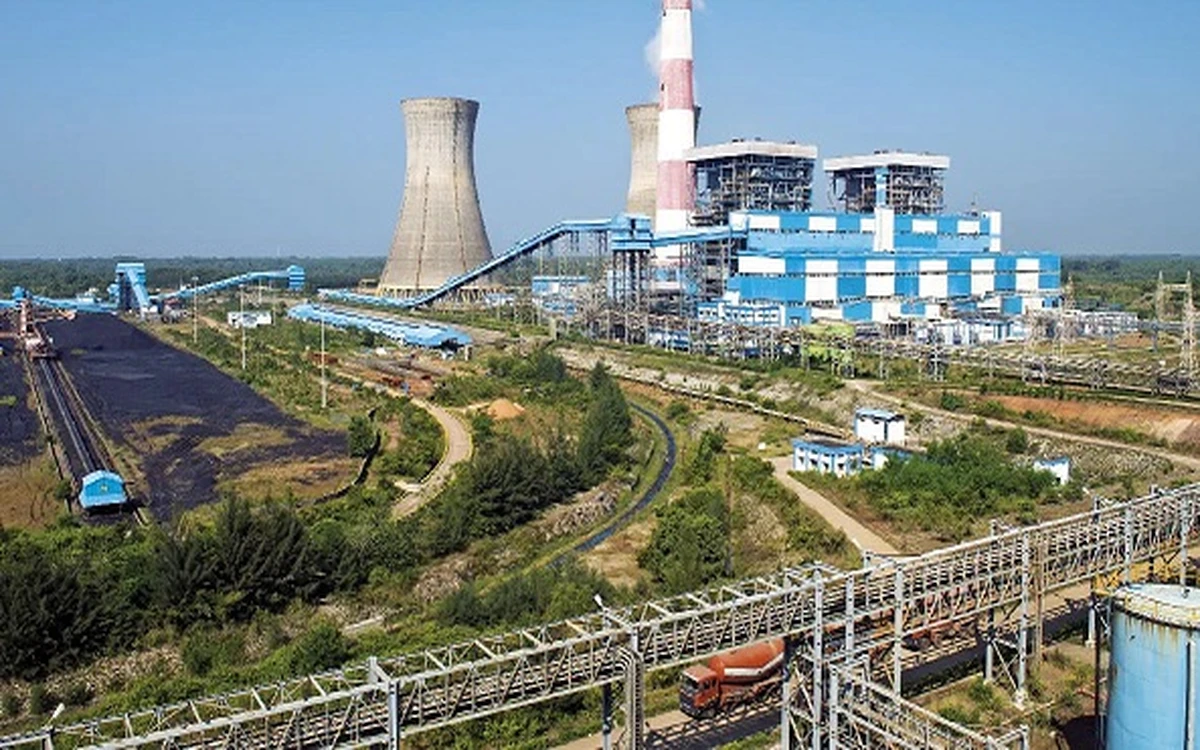
Adani Power Limited has reported a strong operational and financial performance for the financial year 2025-26, despite a challenging demand environment and global energy market uncertainties. Addressing the company’s Q4 FY26 earnings conference call, Mr. S. B. Khyalia, Chief Executive Officer of Adani Power Limited, highlighted the company’s achievements during the year, its ongoing expansion projects, future investment plans, and the outlook for India’s power sector.
Mr. Khyalia said that the world is currently facing a major energy price shock caused by geopolitical developments. According to him, most people have no direct connection with these events but are still affected by the resulting rise in energy costs. He emphasized that the only effective way to reduce such risks is to become self-sufficient in energy requirements. He noted that energy security is vital for economic growth and stability.
He stated that India is fortunate to possess abundant natural resources, including solar energy, wind energy, and coal. These resources strengthen the country’s energy security and support its journey towards energy sovereignty. He also observed that the global community has increasingly realized that fossil fuel-based power generation cannot simply be eliminated. As renewable energy capacity expands, conventional power generation remains essential for balancing the grid and ensuring a stable electricity supply.
According to Mr. Khyalia, as energy requirements continue to increase, reliable domestic energy sources such as coal play a crucial role in powering homes, air conditioners, factories, and data centres. He said Adani Power has consistently delivered dependable power supply to its customers while maintaining strong operational performance.
A major milestone achieved by the company during FY26 was the generation of 105 billion units of electricity. This achievement came during a year when overall power demand growth remained subdued. Power demand growth stood at only 0.8% during FY26 and 1.6% during the fourth quarter compared to the previous year.
Mr. Khyalia explained that the slower demand growth was primarily due to an early and extended monsoon season that lasted almost until November, followed by cold weather conditions in certain regions of the country. However, he noted that power demand began recovering from March onwards as temperatures started rising. He pointed out that peak power demand recently touched 256 GW and is expected to increase further during the current year. Based on these trends, the company expects FY27 to witness strong growth in both overall electricity demand and peak demand.
Despite the dynamic demand conditions and weather-related challenges, Adani Power reported a robust EBITDA of INR 23,431 crore for FY26. The company’s fourth-quarter performance was particularly strong, with EBITDA reaching INR 6,498 crore, representing a 27% increase compared to the same period last year. Mr. Khyalia said this performance reflects the company’s operational resilience and disciplined financial management.
The company ended FY26 with a profit after tax of INR 12,971 crore. On the revenue front, Adani Power reported Q4 FY26 revenue of INR 15,059 crore, reflecting nearly 4% year-on-year growth. Reported revenue for the quarter stood at INR 15,989 crore, representing an increase of 10% over the previous year. For the full year, continuing revenue amounted to INR 55,583 crore and remained broadly stable despite lower margin rates. The company noted that tariffs for imported coal-based power purchase agreements were lower due to the decline in imported coal prices.
Profitability improved significantly during the quarter. Profit after tax for Q4 FY26 increased by 64% year-on-year to INR 4,271 crore. The increase was supported by strong operating performance and lower tax charges. For the full financial year, profit after tax reached INR 12,971 crore, broadly in line with the previous year and demonstrating earnings resilience despite volatility in market conditions.
Adani Power’s capacity expansion programme continues to be a key pillar of its long-term strategy. The company is progressing towards its target of adding 23.7 GW of thermal power capacity by 2032. During FY26, the company successfully secured long-term power purchase agreements for 10.4 GW of expansion capacity.
One of the major developments during the fourth quarter was the receipt of a Letter of Award for a 1,600 MW power purchase agreement from Maharashtra DISCOM. Following this achievement, the company’s total tied-up expansion capacity has increased to 13.3 GW.
The company has also strengthened revenue visibility for its existing operations. Currently, 95% of its operational capacity is tied up under long-term and medium-term power purchase agreements. According to management, this strategy reduces exposure to short-term market volatility and provides greater business stability.
Mr. Khyalia said the company expects stronger PPA offtake and higher bilateral demand during FY27. He expressed confidence that Adani Power will achieve its capacity expansion targets according to planned timelines.
Several expansion projects are progressing steadily. The 1,600 MW Mahan Phase-II project in Madhya Pradesh has achieved 86% completion. In Chhattisgarh, the Raipur Phase-II project has reached 54% completion while the Raigarh Phase-II project is 47% complete. The Korba Phase-II project is also nearing completion, and the company expects to commission it during the current year.
The management reiterated its commitment to maintaining a disciplined capital allocation strategy while pursuing new opportunities within India’s growing energy sector. At the same time, the company is also expanding its focus beyond India.
Mr. Khyalia said Adani Power will evaluate opportunities in thermal power, hydro power, and transmission sectors both domestically and internationally. The company intends to invest in projects that meet its strategic and financial criteria.
As part of its international expansion plans, Adani Power has recently incorporated a Special Purpose Vehicle (SPV) in Bhutan for the development of a 570 MW hydroelectric power project. This move reflects the company’s growing interest in diversifying its generation portfolio beyond thermal power.
The company is also positioning itself to participate in emerging long-term opportunities in India’s power sector, particularly nuclear energy. Several SPVs have been incorporated for investments in future nuclear power projects. The company is currently identifying suitable project sites and obtaining necessary approvals.
However, Mr. Khyalia clarified that the Government of India has not yet notified the relevant rules governing private sector participation in nuclear power projects. As a result, the company is presently focusing on preparatory activities so that it can move quickly once policy clarity emerges.
He stated that the company is identifying locations and applying for required approvals wherever possible. Once the government releases the regulatory framework, Adani Power will be able to determine the scale of investments and capacity development plans more clearly.
Discussing the company’s financial position, management reported that total debt stood at INR 53,556 crore as of March 31, 2026, while net debt was INR 45,022 crore. The increase in leverage was mainly due to planned bridge financing for ongoing capital expenditure programmes.
During the quarter, the company successfully raised INR 7,500 crore through secured non-convertible debentures. Additional interim funding was also obtained from banks through corporate debt facilities. These funds are being utilized to support the company’s large-scale expansion programme.
The company highlighted the strong visibility provided by its contracted portfolio. Around 95% of its operating capacity of 18.15 GW is covered under long-term and medium-term PPAs. In addition, 13.3 GW of PPAs have already been secured for the ongoing 23.7 GW expansion programme.
Management noted that these PPAs provide availability-based fixed charges, ensuring stable EBITDA generation on a per-megawatt basis. New PPAs also carry significantly improved capacity charges, which are expected to enhance future returns. Since fuel costs are generally passed through under these agreements, exposure to fuel price fluctuations remains limited. Fuel availability is also secured because state utilities are required to obtain fuel allocations before offering contracts to successful bidders.
Mr. Khyalia also explained the company’s merchant power exposure. Currently, only around 5% of operational capacity falls under the merchant category, meaning it is not tied to long-term or medium-term PPAs. At the beginning of FY26, merchant capacity accounted for approximately 16% of operational capacity.
He explained that merchant power sales were achieved through the available open capacity during different periods of the year. In some cases, when a PPA-based power station experiences an outage, the company can purchase power from the market and supply electricity under existing contractual obligations. Such transactions are also classified under merchant operations.
Providing details on future capital expenditure plans, Mr. Khyalia said the company will add 1.32 GW through the Korba Phase-II project during FY27. Capital expenditure for FY26-27 is expected to be around INR 25,000 crore to support ongoing expansion activities.
For FY27-28, capital expenditure is projected to increase further to approximately INR 33,000 crore. During that year, the company plans to add another 1.6 GW of generation capacity. These investments underline Adani Power’s commitment to expanding its power generation portfolio and meeting India’s growing energy requirements.
On the issue of receivables from the Bangladesh Power Development Board, Mr. Khyalia stated that outstanding dues have reduced and the company is receiving regular payments from Bangladesh. Regarding disputed amounts and the reconciliation process, he said an independent expert has been appointed to hear both parties.
Once the expert submits an opinion, and if it is accepted by both sides, the recommendations will be implemented. If either party does not accept the findings, the matter may be referred to the Singapore International Arbitration Centre for resolution.
Mr. Khyalia also shared details regarding the Korba expansion project. He stated that, in addition to the acquisition cost of approximately INR 4,100 crore, the company plans to invest another INR 4,000 crore. The total investment in the project is therefore expected to range between INR 8,000 crore and INR 8,500 crore.
This investment includes both the already commissioned units and the new units under development. Because the acquisition cost covers multiple units, management said it would be difficult to accurately determine the per-megawatt cost specifically for Units 3 and 4.
Regarding the Mahan Phase-II project, the company had initially expected to commission both units during the current year. While management remains optimistic, ongoing geopolitical developments have created challenges related to labour availability and LPG supply.
As a result, the company is adopting a conservative outlook. One unit is still targeted for commissioning by the end of the current year. If geopolitical disruptions continue for a prolonged period, the commissioning timeline could extend into the first quarter of the following year.
Overall, Adani Power concluded FY26 on a strong note with record power generation, robust profitability, expanding contracted capacity, and significant progress on its long-term growth projects. The company remains confident about rising electricity demand in India, continued growth in power consumption, and the opportunities emerging from thermal, hydro, transmission, and future nuclear power developments. With a large expansion pipeline, secured PPAs, and disciplined capital allocation, Adani Power is positioning itself to play an increasingly important role in supporting India’s growing energy needs in the years ahead.

1 days ago
Total Views : 26

1 days ago
Total Views : 20

1 days ago
Total Views : 12
1 days ago
Total Views : 89
1 days ago
Total Views : 24
last week
Total Views : 62
last week
Total Views : 16

last week
Total Views : 54
last week
Total Views : 18
.webp)
last week
Total Views : 23