Loading... Today

-- 0

-- 0

Transmission giant crosses ₹3 lakh crore asset base, commissions world’s first 765 kV digital substation, enters battery storage and Kenya transmission project while preparing for a multi-lakh-crore investment cycle
The Electrical Post
As India accelerates its journey towards becoming one of the world's largest energy markets, Power Grid Corporation of India Limited (POWERGRID) is positioning itself at the heart of the country's power transformation. Backed by rising electricity demand, large-scale renewable energy integration, expanding transmission requirements and the government's net-zero ambitions, the state-owned transmission major is entering a new phase of growth marked by record infrastructure creation, technological innovation and international expansion.
Addressing analysts and institutional investors, Shri Burra Vamsi Rama Mohan, Chairman and Managing Director of POWERGRID, painted a picture of a company that is not only India's largest transmission utility but also one that is preparing itself for the next era of energy transition.
According to him, India is witnessing an unprecedented transformation in the power sector driven by rapid economic growth, an increasing share of electricity in the country's energy basket, renewable energy integration on a massive scale and the government's commitment towards achieving net-zero emissions. In this evolving landscape, POWERGRID continues to play a strategic role in strengthening the national grid while ensuring reliable, secure and efficient power transmission across the country.
Despite operating in a dynamic business environment, the company has maintained strong operational performance and financial discipline. A robust balance sheet, healthy cash flows and a consistent dividend track record continue to reinforce POWERGRID's position as one of India's most dependable infrastructure companies.
The scale of POWERGRID's operations today reflects its central role in India's power ecosystem. The company has crossed the landmark of ₹3 lakh crore in gross fixed assets. As of March 31, 2026, its transmission network stretched across 1.84 lakh circuit kilometres, while transformation capacity stood at 624 GVA. The company also operates 11 HVDC projects and manages around 101 GW of India's total 120 GW inter-regional transmission capacity.
Maintaining one of the highest reliability standards globally, POWERGRID achieved system availability of 99.84% during the year. The company currently operates through a network of 64 subsidiaries, although efforts are underway to streamline the structure and strengthen governance.
The growth of tariff-based competitive bidding (TBCB) projects has led to the creation of a large number of special purpose vehicles (SPVs). With over 80 SPVs currently under its umbrella, POWERGRID has initiated consolidation measures. Seventeen SPVs have already been merged into two entities, while another 28 SPVs are in the process of being merged into two additional SPVs. Management believes these measures will help create a leaner and more efficient corporate structure.
The company's execution performance during FY26 was particularly impressive. POWERGRID added 4,765 circuit kilometres of transmission lines and 72,055 MVA of transformation capacity during the year. The pace of expansion translates into almost 500 MVA of capacity addition every 2.5 days and nearly 13 circuit kilometres of transmission line construction every day.
Nine new substations were commissioned during the year, taking the total number of substations under POWERGRID's network to 291. Among the key projects completed were Bhadla-Sikar, Ahmedabad-Lakadia and Ahmedabad-Navsari transmission systems, which are critical in transporting renewable power generated in Gujarat's Khavda region to major demand centres including Mumbai.
These projects form an important part of India's green energy corridor, ensuring that renewable power generated in remote regions reaches consumers across the country. New substations commissioned during the year include Bhadla, Ramgarh, Dausa, Bikaner-III, KPS-2, KPS-3, Ahmedabad, Narela and Ananthapuram.
The Narela substation in Delhi and the Dausa substation in Rajasthan stand out as examples of rapid execution. The Dausa project was completed within just eight months of casting the first foundation, highlighting the company's ability to deliver complex infrastructure projects in record time.
One of the strongest indicators of the company's growth momentum is its capital expenditure performance. Initially targeting a capital expenditure of around ₹28,000 crore, POWERGRID subsequently revised the target to ₹35,000 crore before ultimately delivering close to ₹40,000 crore during FY26.
Similarly, capitalization exceeded guidance. Against an initial commitment of ₹25,000 crore, the company achieved capitalization of ₹28,206 crore during the year. For FY27, POWERGRID has provided initial capex guidance of ₹37,000 crore and capitalization guidance of around ₹30,000 crore.
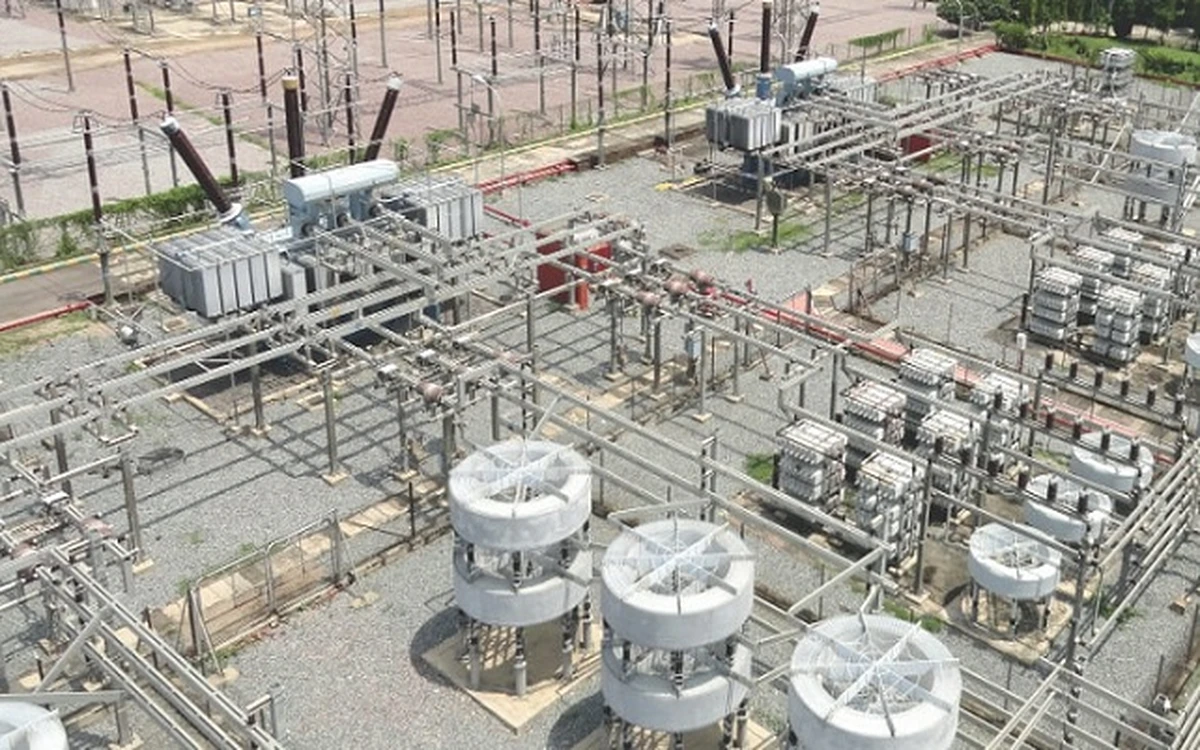
Technology and innovation continue to remain central to POWERGRID's strategy. During FY26, the company commissioned the world's first 765 kV digital substation, marking a major milestone in transmission technology.
The company also commissioned Asia's first transformer using synthetic ester oil. Developed with significant involvement from POWERGRID, the transformer replaces conventional mineral oil with a biodegradable and fire-safe alternative. With a fire point exceeding 300 degrees Celsius, synthetic ester oil significantly reduces environmental impact while enhancing operational safety.
Another breakthrough innovation was the deployment of India's first insulated cross-arm technology at the 400 kV level. Installed on the Maharani Bagh-Narela transmission line, the technology substantially reduces right-of-way requirements and minimizes environmental impact. Since transmission corridors often face challenges related to land acquisition and urban development, insulated cross-arms offer an effective solution for expanding networks in densely populated regions.
The company also unveiled an indigenously developed 220 kV mobile Gas Insulated Switchgear (GIS), a truck-mounted and trailer-based system designed for rapid deployment. The mobile GIS can be quickly transported and installed wherever required, significantly improving grid resilience during emergencies such as cyclones, natural disasters or equipment failures.
POWERGRID plans to further strengthen this capability by introducing 132 kV and 400 kV mobile GIS systems during the current calendar year. Management believes these systems will function as emergency restoration assets not only for transmission towers but also for substations, providing a new layer of reliability to India's power grid.
Battery Energy Storage Systems (BESS) represent another important area of focus for the company. POWERGRID recently secured its first BESS project through the competitive bidding route at Kalikiri in Andhra Pradesh.
The project is expected to provide valuable operational experience as India begins integrating large-scale energy storage into the electricity network. The company also sees significant opportunities emerging following the Central Electricity Regulatory Commission's decision to allow transmission system developers to establish integrated energy storage systems.
Following this regulatory change, POWERGRID has already initiated discussions in both northern and western regions for future storage projects. The company believes energy storage will become a critical component of India's power infrastructure as renewable energy penetration increases and grid balancing requirements grow.
POWERGRID is also taking its expertise beyond India's borders. In a major strategic development, the company has entered its first international transmission public-private partnership model through a collaboration with Africa.
The project, valued at approximately $300 million, will be executed through Mwanga Transmission Company in Kenya. The initiative marks a significant step in POWERGRID's global expansion strategy and could serve as a template for future international ventures.
The partnership with Africa is already opening doors to additional opportunities in countries including Uganda, Zimbabwe and Mozambique. Depending on regulatory frameworks and project feasibility, management expects the Kenya model to pave the way for further transmission investments across the African continent.
The company's success in tariff-based competitive bidding projects continues to strengthen its market position. During FY26, a total of 28 projects were floated under the TBCB route, of which POWERGRID emerged successful in nine projects.
One notable win includes the Pune East intrastate transmission project in Maharashtra. The company's strong performance in competitive bidding demonstrates its ability to compete effectively while maintaining financial discipline.
Looking ahead, the transmission opportunity pipeline remains enormous. According to POWERGRID, projects worth approximately ₹1.7 lakh crore are already under implementation. This includes ₹1.37 lakh crore of TBCB projects, ₹28,000 crore under the regulated tariff mechanism (RTM) and other business opportunities worth around ₹4,200 crore.
In addition, another ₹1.1 lakh crore worth of transmission projects are currently under various stages of bidding. This pipeline includes both interstate and intrastate projects and excludes several state-level opportunities that are expected to emerge in the coming years.
Major upcoming projects include Rajasthan Barmer Complex Phase-IV, Vizag-7 Green Hydrogen evacuation systems, Jam Khambhaliya, Krishnagiri, Lakadia, ERWR Inter-Regional Network and the Nawada-Durgapur transmission system.
Beyond the immediate pipeline, POWERGRID sees even larger opportunities emerging from India's long-term energy transition plans. Government projections indicate more than 900 GW of installed generation capacity by 2036. Meeting the transmission requirements for this capacity alone could create investment opportunities worth nearly ₹7.9 lakh crore.
Hydropower development in the Brahmaputra basin offers another significant growth avenue. The region's estimated hydroelectric potential of 76 GW could require transmission investments worth approximately ₹6.4 lakh crore over two phases.
New demand centres are also expected to reshape India's transmission landscape. Data centres, green hydrogen facilities and electrified industrial clusters could create demand for an additional 71 GW of power transmission capacity.
According to management, regardless of whether new generation capacity is renewable, thermal, hydro or nuclear, and regardless of whether demand comes from data centres, green hydrogen or industrial consumers, transmission infrastructure will remain the indispensable link connecting generation to consumption.
Financially, POWERGRID delivered a stable performance during FY26. Total income increased marginally to ₹47,684 crore from ₹47,459 crore in FY25. While regulated tariff projects naturally experience revenue declines over time due to depreciation-related factors, the impact was largely offset through capitalization, operational efficiencies and additional revenue streams.
Profit after tax on a consolidated basis increased 3% to ₹15,928 crore, while standalone PAT rose 4% to ₹15,921 crore.
The company also continues to make steady progress on its environmental, social and governance commitments. POWERGRID achieved its target of sourcing 50% of its electricity consumption from renewable energy ahead of schedule.
The company has already achieved 55% progress towards its goal of becoming water positive by 2030. Similarly, nearly 90% of its waste is now diverted from landfills, moving the company closer to its zero-waste objective.
Perhaps most notably, management expressed confidence that POWERGRID could achieve its net-zero emissions target well before the planned year of 2047.
As India embarks on one of the world's largest energy transition journeys, POWERGRID appears determined to remain at the centre of this transformation. With record capital expenditure, cutting-edge transmission technologies, a growing battery storage portfolio, international ambitions and a multi-lakh-crore project pipeline, the company is positioning itself not merely as a transmission utility but as a key enabler of India's future energy economy.

1 days ago
Total Views : 26

1 days ago
Total Views : 20

1 days ago
Total Views : 12
1 days ago
Total Views : 89
1 days ago
Total Views : 24
last week
Total Views : 62
last week
Total Views : 16

last week
Total Views : 54
last week
Total Views : 18
.webp)
last week
Total Views : 23