Loading... Today

-- 0

-- 0

NEEPCO Reports Strong FY25 Performance, Advances Hydro, Solar and Pumped Storage Portfolio to Support India’s Energy Transition
The Electrical Post
New Delhi: North Eastern Electric Power Corporation Limited (NEEPCO) delivered a resilient operational and financial performance in FY 2024-25 despite challenges arising from lower precipitation and constrained natural gas availability, while simultaneously accelerating investments in hydroelectric, solar and energy storage projects that are expected to play a critical role in India's evolving power sector.
North Eastern Electric Power Corporation Limited (NEEPCO) has been a trusted power generation company in the North Eastern region of India and beyond since 1976, working closely with the Ministry of Power and the north eastern states to act in their best interest in tapping the enormous power potential of the region and the country.
Addressing the 49th Annual General Meeting, Chairman and Managing Director Gurdeep Singh said the company generated 8,020.29 million units (MU) of electricity during the year through its diversified generation portfolio. Hydro power remained the backbone of operations, contributing 5,416.93 MU, while gas-based stations generated 2,597.46 MU and solar projects added 5.90 MU. According to Singh, this diversified energy mix strategically positions NEEPCO in India's rapidly transforming energy landscape, where balancing reliability with sustainability has become increasingly important.
The company's generation performance assumes significance at a time when India's renewable energy sector continues to witness unprecedented growth. As of July 2025, the country had surpassed 119 GW of installed solar capacity, reflecting the accelerating pace of clean energy deployment. However, Singh emphasized that hydro, gas-based and solar generation together provide the flexibility and reliability needed to support a power system increasingly dominated by variable renewable energy sources.
Despite adverse weather conditions and fuel supply constraints affecting generation targets, NEEPCO recorded electricity generation of 8,020.29 MU, registering a marginal increase of 0.24% over the previous year. The performance highlights the company's ability to optimize plant operations and maintain generation levels under challenging circumstances.
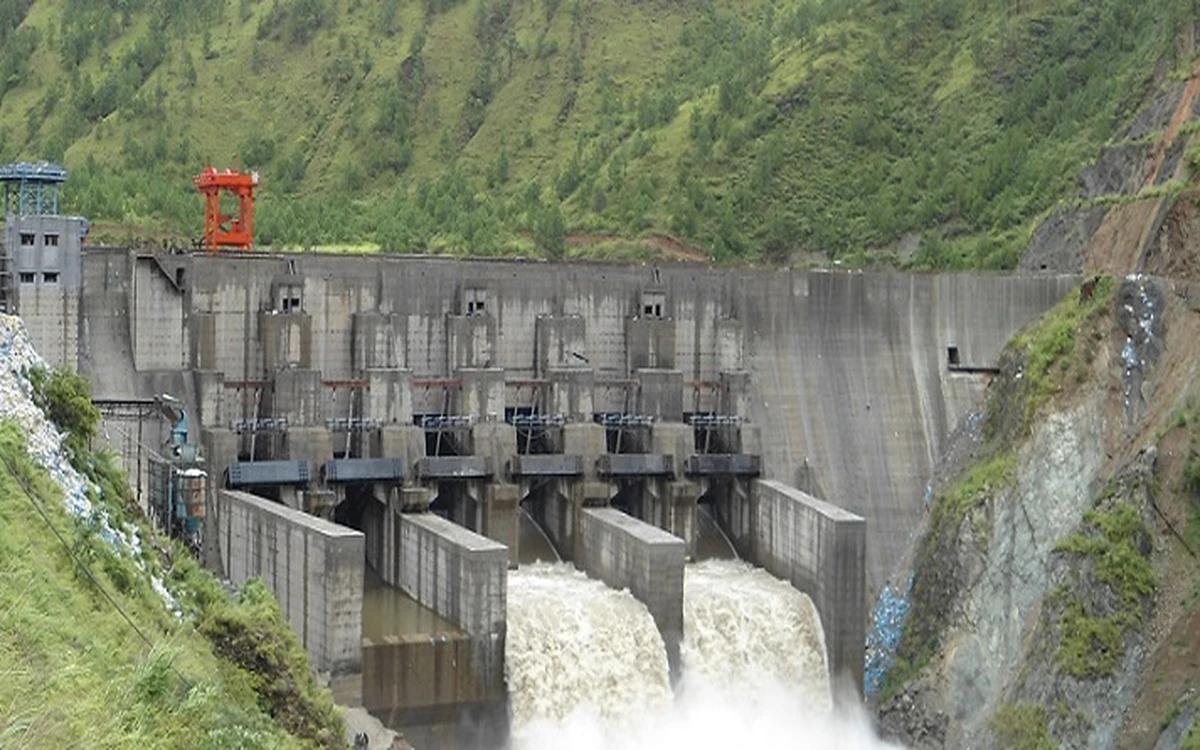
A major operational milestone during the year was the completion of the renovation and modernization programme at the 275 MW Kopili Hydro Power Station. The modernization initiative is expected to improve plant reliability, efficiency and long-term operational sustainability. In another significant achievement, the final unit of Khandong Power Station achieved commercial operation on August 30, 2025, resulting in all 38 installed units across the company's generating stations becoming fully operational.
The company's financial performance reflected disciplined management and operational efficiency. NEEPCO reported a total income of Rs. 4,34,187.21 lakh during FY25. Profit Before Tax stood at Rs. 86,019.18 lakh, including movement in Regulatory Deferral Account balances, while Profit After Tax reached Rs. 58,468.51 lakh. The PAT represented a growth of 6.67% over FY24, underlining the company's ability to maintain profitability despite operational challenges.
The Board approved an interim dividend of Rs. 20,000 lakh for FY25 and recommended a final dividend of Rs. 2,500 lakh. This takes the total dividend payout for the financial year to Rs. 22,500 lakh, equivalent to Rs. 0.62 per share on a face value of Rs. 10 per share. The payout represents 38.48% of the company's Profit After Tax, reflecting NEEPCO's commitment to delivering value to shareholders while continuing to invest in future growth opportunities.
Looking ahead, NEEPCO sees significant opportunities arising from India's rapidly growing electricity demand. The company expects demand growth to be driven by rising household incomes, increasing adoption of electrical appliances, industrial electrification, air-conditioning loads, electric vehicle penetration and the rapid expansion of data centers supporting artificial intelligence and digital infrastructure.
Singh highlighted that as renewable energy becomes an increasingly dominant component of India's power mix, intelligent generation scheduling and dispatchable resources will become critical for grid stability. In this context, hydroelectric power stations and pumped storage projects are expected to play a pivotal role in balancing intermittent renewable energy generation and ensuring reliable power supply.
NEEPCO is therefore positioning itself not merely as a power producer but as a developer of strategic infrastructure required to support India's renewable energy transition and NTPC Group's target of achieving 60 GW of renewable energy capacity by 2032. The company believes hydroelectric and energy storage assets will become increasingly valuable as India moves toward a cleaner and more flexible electricity system.
The corporation has significantly expanded its hydroelectric development pipeline. Two major hydro projects in Arunachal Pradesh—the 240 MW Heo Hydroelectric Project and the 186 MW Tato-I Hydroelectric Project—have entered the construction phase following investment approval received in December 2024. Civil and hydro-mechanical contracts for both projects have already been awarded. In addition, investment approval for the 700 MW Tato-II Hydroelectric Project was granted in September 2025, with commissioning targeted within 72 months.
Overall, NEEPCO currently has approximately 1,500 MW of hydroelectric capacity under development and an additional 735 MW in the project pipeline. These investments are expected to strengthen the company's position as one of India's leading hydro power developers while contributing to the country's clean energy goals.
The company is also making significant progress in solar energy. Installation work is underway for a 300 MW Inter-State Transmission System-connected solar project in Bikaner, Rajasthan. Of the total capacity, 200 MW is expected to be commissioned by December 2025, while the remaining 100 MW is scheduled for completion by August 2026. The project is expected to generate around 762.30 MU of electricity annually. The foundation stone for the project was laid by the Prime Minister on May 22, 2025, highlighting its strategic importance.
NEEPCO is simultaneously exploring floating solar opportunities. Tender finalization is underway for a 35 MW floating solar project on one of its hydro power reservoirs, while pre-feasibility studies are being conducted for floating solar installations across five reservoirs located in Mizoram, Meghalaya and Uttar Pradesh. The company has also installed and commissioned 790 kW of rooftop solar capacity under the PM Surya Ghar Muft Bijli Yojana as of September 2025.
Recognizing the growing need for energy storage, NEEPCO plans to develop 2,620 MW of pumped storage capacity. The proposed portfolio includes the 800 MW Wah Umiam Pumped Storage Project in Meghalaya, the 320 MW Kopili Pumped Storage Project in Assam and the 1,500 MW Wah Umsong-Laitlum Pumped Storage Project in Meghalaya. These projects are expected to provide crucial grid balancing services and support the integration of renewable energy into the national power system.
Research and development continues to remain central to NEEPCO's growth strategy. The company is investing in advanced technologies aimed at improving operational efficiency, enhancing safety and supporting future energy systems. Key initiatives include the development of a cloud-based automated communication system for efficient operation of the Panyor Lower Hydro Power Station, a highly reliable fire detection system based on Triple Modular Redundancy technology, and research into low-cost sustainable electro-catalysts and proton exchange membranes for green hydrogen production.
Among its engineering innovations, NEEPCO has successfully addressed acidic water corrosion challenges at the Kopili Hydro Power Station through the use of roll-bonded clad plates with stainless steel cladding. The technology, deployed for the first time in a hydro power project, demonstrates the company's commitment to innovation, reliability and long-term asset sustainability.
As India moves toward higher renewable energy penetration and increased electricity demand, NEEPCO's diversified portfolio of hydro, gas, solar and energy storage assets places it in a strong position to support the country's energy transition. The company's expanding project pipeline, strong financial performance and focus on technological innovation indicate that it is preparing to play a larger role in building a resilient, low-carbon and future-ready power system.
1 days ago
Total Views : 13
1 days ago
Total Views : 9
last week
Total Views : 33
last week
Total Views : 18
last week
Total Views : 105
last week
Total Views : 55
2 weeks ago
Total Views : 132
2 weeks ago
Total Views : 142
2 weeks ago
Total Views : 89
2 weeks ago
Total Views : 58